

Real-time discharge compliance monitoring for metals
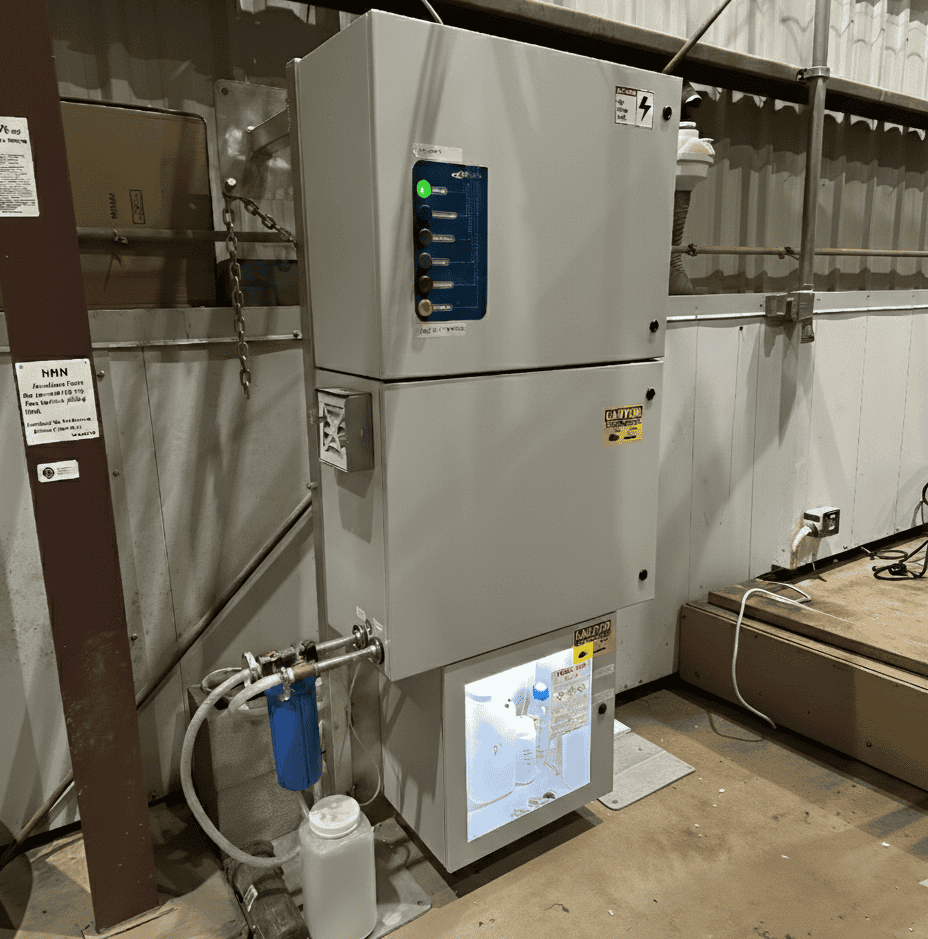
To know whether wastewater is within its discharge limits before you release it, you need metals data while the water is still on site. AquaValid measures dissolved metals in effluent and tailings water about a minute after sampling, every ~10 minutes, around the clock, so a rising metal is an early warning you act on, not an exceedance you explain. Your accredited lab results remain the compliance record.
How do you know wastewater is within discharge limits before release?
A lab result tells you whether last week’s sample was in spec, usually after the water has gone. The question operators ask is “are we in spec right now?” AquaValid answers it on the discharge stream itself: a continuous trend for the metals in your permit, about 1,000 readings a week, delivered via API to the dashboards and control systems your team already uses. Set your own alarm well below the permit limit, and an upward drift becomes time to divert, treat or hold.
What does continuous data change for compliance?
Early warning for metal excursions
A live trend on your discharge metals shows an upward drift hours before it becomes an exceedance, while there is still time to act.
A record between lab samples
A time-stamped history of every operating hour, not just the hours someone pulled a bottle, supporting the ICP results that build your compliance record.
Protect the social license
Demonstrating continuous monitoring to regulators and communities is a different conversation than quarterly grab-sample reports.
AquaValid operates alongside accredited laboratory ICP analysis — it makes your compliance programme more responsive and better informed; the accredited lab remains the compliance record.
Read next: MDMER metal limits and sampling frequency · Lab turnaround vs real-time data
What sets your discharge limits?
Canada: MDMER for mines
Metal and diamond mines discharge under the federal MDMER, with Schedule 4 limits for metals including copper, lead, nickel and zinc, and weekly sampling.
MDMER explained →US: NPDES permits
Direct dischargers hold an NPDES permit under Clean Water Act section 402, issued by EPA or an authorized state, often based on effluent guidelines such as 40 CFR Part 433 (metal finishing) or Part 440 (ore mining and dressing).
Discharging to a municipal sewer
Facilities that discharge to a municipal sewer work to the limits their municipality sets.
Whatever the framework, your permit sets the number. AquaValid shows you, continuously, where your discharge sits against it.
Which metals can you monitor for discharge compliance?
Choose up to 5 concurrent analytes for your discharge — these are frequent picks for compliance monitoring.
Detection limits are per-element and matrix-dependent. A sample of your discharge establishes what AquaValid can see in it.
“The quicker you can have real time results when it comes to any kind of parameters that are compliant, the better off we are. If you wait for the lab, you’re already out of compliance before you get their results.”
Compliance monitoring FAQ
How can we know wastewater is within discharge limits before release?
Measure the discharge continuously while it is still on site. AquaValid reports dissolved metals about a minute after sampling, every ~10 minutes, so you can see where each metal sits against your permit limit and divert, treat or hold before release.
How does AquaValid work with our lab compliance sampling?
It complements it. Accredited ICP analysis remains your compliance record. AquaValid adds continuous visibility between those samples, so your programme is more responsive and better informed.
What happens when a metal concentration starts rising?
The continuous data feed streams into your dashboards and control systems via API — alerts and trends appear where your operators already work, in time to divert, dose, or hold.
Which metals can we monitor for discharge compliance?
You choose up to 5 concurrent analytes from AquaValid’s 27-analyte panel to match your permit — zinc, copper, nickel and cadmium are frequent picks. See the elements page for the full panel.
Tell us about your water
We’ll tell you honestly whether AquaValid can see what you need.
Contact us